

quinta-feira, 12 de abril de 2018

Conclusion
With this work we could learn first the meaning of music, its influence in people´s lives and mainly more about different genres of music, in this case we learned about Samba a music style that has its origins from Africa and Brazil, becoming a mix from this nations. Its main instruments are "Tambor", "Surdo", "Timbau" and "Pandeiro". Samba become a pretty popular music in our country representing the fusion from different cultures and symbolizing a globalized world. Another important point we need to see is how this essay helped us to improve and to get more vocabulary and focus on a good pronunciation and understanding the main ideas of what was said by each one.
Introduction
The purpose of this essay is to talk about one genre of music, its definition, origin, history, evolution, how it is nowadays, the main singers of each period and how they influenced people all over the world. In this essay we talked a little bit about Samba, one of the most populars music styles from Brazil. We choose this because we love Carnival, soccer and Zeca Pagodinho, both are liked with Samba, and to celebrate happiness nothing is better than this rythm.
quarta-feira, 11 de abril de 2018
References
WHITLAM, John et al. COLLINS DICTIONARY. Glasgow: Harpercollins, 1992.
https://historiadomundo.uol.com.br/curiosidades/origem-samba.htm
https://brasilescola.uol.com.br/carnaval/historia-do-carnaval.htm
https://pt.wikipedia.org/wiki/Categoria:Cantores_de_samba
http://curtamais.com.br/goiania/listamos-os-maiores-sambistas-brasileiros-de-todos-os-tempos
http://www.vh2rodadesamba.xpg.com.br/tipo.htm
Carnival
- What is it
Carnival is a festival of Western Christianity that occurs before the liturgical season of Lent . The main events occur typically during February or
early March, historically known as pré-quaresma. Carnival typically involves a
public celebration or parade combining some circus elements, masks and public street party.
People wear costumes for many of these celebrations, allowing them to lose your
individuality and experience a daily high sense of social unity.
Excessive consumption of alcohol, meat and other foods proscribed during
Lent is extremely common.
- History of Carnival
The
carnival came to Brazil by the 17th century and was influenced by the Carnival
parties that took place in Europe. In countries like Italy and France, the
Carnival took place in forms of parades, where the Carnival wore masks and
costumes. Characters like Columbine, Pierrot and the King Momo were also
incorporated into the Brazilian Carnival, although they are of European origin.
In
Brazil, at the end of the 19th century, begin to appear the first Carnival
blocks, cords and the famous "Corsos". The latter became more popular
in the beginning of the 20TH centuries. People dress in costumes, decorated
their cars and, in groups, paraded through the streets of the cities. There the
origin of floats, typical of samba schools.
In the
20th century, the Carnival was growing and becoming more and more a popular
party. This growth occurred with the help of Carnival marches. The tracks left
the increasingly lively Carnival.
The first
samba school in Rio de Janeiro and was Deixa Falar. Was created by Ismael
Silva. Years later the Talk became the samba school Estácio de Sá. From there
the street carnival begins to make a new format. Begin to emerge new samba
schools in Rio de Janeiro and Sao Paulo. Organized into Leagues of Samba schools
begin the first Championships to check which samba school was more beautiful
and lively.
The
Carnival of street retained its original traditions in the Northeast region of
Brazil. In cities such as Recife and Olinda, people leave the streets during Carnival
in the rhythm of frevo and maracatu.
The
parade of giant puppets, in Recife, are one of the main attractions of this
city during the Carnival.
In the
city of Salvador, there are eletrics cars, packaged by dancing songs of singers
and groups typical of the region. In the city include the black blocks as the
Olodum and Ileyaê, in addition to the street and blocks of Afoxé Filhos de
Gandhi.

terça-feira, 10 de abril de 2018
sábado, 7 de abril de 2018
Playlist
Malandro Rifle
Deixa a vida me levar
Se eu largar o freio
Mande um sinal
Melhor eu ir
Viver sem ti
Para de falar tanta besteira
Ta vendo aquela lua
A amizade
Ta escrito
Patricinha do olho azul
Aquilo que era mulher
Sequestraram minha sogra
Quando a gira girou
Quem usa antena é televisão
Dedo de seta
Bicho Feroz
Pega eu
Zé do Caroço
Só quero te namorar
A mulher do fim do mundo
A Carne
Malandro é malandro
Meu lugar
Amiga da minha mulher
Burguesinha
Leci Brandão and Elza Soares
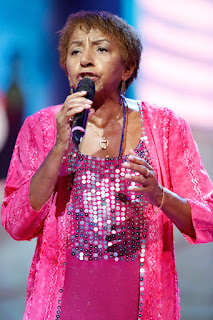
- Leci Brandão da Silva (Rio de Janeiro, 12 of Septembre of 1944) is a singer, composer, actress, brazilian politics and one of the most important interpreters of samba of brazilian popular music.
- Elza da Conceição Soares (Rio de Janeiro, 23 Juna of 1937) is a dedicated singer and brazilian songwriter .In 1999, she was voted by radio BBC, as the brazilian singer of the Millennium. Choosing the project The Millennium Concerts, English radio, created to celebrate the arrival of the year 2000. In addition, Soares appears in the list of the 100 greatest voices of the brazilian music developed by magazine Rolling Stone Brazil


Exaltasamba
Exaltasamba is a group of brazilian samba. Formed in São Bernardo do Campo in 1982. The group in its early career went through several changes of its members.
At the beginning of the Decade of 1990, Exaltasamba released its first album, called Eterno Amanhecer. In the middle of the decade, the group became a national success from the song "Luz do Desejo".
The Group won several awards including the prize Latin Grammy of Samba/Pagode album, because of the work known as "25 Anos". Exaltasamba fans are called "exalta maníacos”. The group ceased publication at the end of February 2012.

Turma do Pagode
Turma do Pagode is a brazilian group of samba and pagode formed in 2001 in neighborhood of Parada Inglesa,The northen zone of São Paulo. Famous for your song that reached the first place at the box office "Lancinho". Currently, the band is composed of the these members, Caramelo, Fabiano, Rubinho, Neni, Marcelinho TDP, Thiago and Leandro.


Fundo de Quintal
Fundo de Quintal is a group of samba formed in the Brazil at the end of the the 1970. Emerged from the Carnival block Cacique de Ramos, of the City of Rio de Janeiro, the group became a unique reference in subgenus pagode.
The most famous music is "A amizade"

The most famous music is "A amizade"

Bezerra da Silva
José Bezerra da Silva (Recife, February 23 from 1927— Rio de Janeiro, 17 of January of 2005) was a singer, composer, guitarist, percussionist and interpreter of Brazilian musical genres coco and samba in particular of partido alto.
In principle, was devoted mainly to coco to become one of the main exponents
of the samba in the following years. Through samba,
sang about the social problems found within the communities, within the limit
of the marginality and the music industry

Zeca Pagodinho
Son of Carmen and Jesse, Zeca was born in Irajá, since little went on to attend rodas de sambai nfluenced by your family. Lived in several neighborhoods of Rio but always showed enormous appreciation for Xerém (Duque de Caxias), which has a site and a music school for underprivileged children in the region. His first recording was in 1983, with the samba "Camarão que dorme a onde leva", of your authorship, Arlindo Cruz and Beto Without Arm, from the invitation to your godmother Beth Carvalho. In 2003, at the peak of your career, was the first artist of Samba to record a TV special, CD and DVD by MTV Brazil.

States with big acceptacion in Brazil
- Bahia
- Rio de Janeiro
- São Paulo
The best-known and most successful samba types are from Bahia, Rio de Janeiro
and São Paulo. The Bahian samba is influenced by lundu and maxixe,
with simple letters, fast swing and repetitive rhythm. The lambada, for
example, is in this style, because it originates in the maxixe.
The samba de roda, which appeared in Bahia in the 19th century, presents
Afro-Brazilian cultural elements. With clapping and singing, the dancers dance
inside a wheel. The sound is due to a musical ensemble, which uses viola,
atabaque, berimbau, rattle and tambourine.
In Rio de Janeiro, samba is linked to life in the hills, and the lyrics speak
of urban life, of the workers and of the difficulties of life in an enjoyable
and often humorous way.
Among the paulistas, the samba gains a connotation of mixture of races. With
Italian influence, the lyrics are more elaborate and the accent of the
neighborhoods of workers gains space in the samba style of São Paulo.
Main Types
Samba-enredo
It appears in Rio de Janeiro during the 1930s. The theme is linked to the subject that the samba school chooses for the year of the parade. It usually follows social or cultural themes. It defines all the choreography and scenography used in the parade of the samba school.
Samba de partido alto
It appears in Rio de Janeiro during the 1930s. The theme is linked to the subject that the samba school chooses for the year of the parade. It usually follows social or cultural themes. It defines all the choreography and scenography used in the parade of the samba school.
Samba de partido alto
With improvised lyrics, they talk about the reality of the hills and the most needy regions. It is the style of the great masters of samba. The best-known high-profile composers are: Moreira da Silva, Martinho da Vila and Zeca Pagodinho.
Pagode
He was born in the city of Rio de Janeiro in the 1970s, and won the radio and dance floor in the following decade. It has a repetitive rhythm and uses percussion instruments and electronic sounds. It spread quickly through Brazil, thanks to the simple and romantic lyrics. The main groups are: Backyard Fund, Negritude Jr., Only to Contrariar, Black Race, Katinguelê, Samba Patrol, Pique Novo, Mischief, Art Popular.
Samba-canção
It arose in the 1920s, with slow rhythms and sentimental and romantic lyrics. Example: Ai, Ioiô (1929), by Luís Peixoto.
Samba carnavalesco
Marchinhas and Sambas made to dance and sing in carnival dances. Examples: Open wings, Windbreak, Aurora, Balancê, Cabelloira do Zeze, White Flag, Chiquita Bacana, Colombina, Marvelous City among others.
Samba-exaltação
With lyrics patriotic and highlighting the wonders of Brazil, with orchestra accompaniment. Example: Aquarela do Brasil, by Ary Barroso recorded in 1939 by Francisco Alves.
Samba de breque
This style has moments of quick stops, where the singer can include comments of critical character or humoristic. One of the masters of this style is Moreira da Silva.
Samba de gafieira
It was created in the 1940s and has orchestra accompaniment. Fast and very strong in the instrumental part, it is widely used in ballroom dancing.
Sambalanço
It appeared in the 50's (1950's) in clubs of São Paulo and Rio de Janeiro. Received a great influence of the jazz. One of the most significant representatives of sambalanço is Jorge Ben Jor, who also mixes elements of other styles.
History
The roots
of samba were planted on Brazilian soil in colonial Brazil, with the arrival of
slave labor in our country.
Other important samba artists of all time: Pixinguinha,
Ataulfo Alves, Carmen Miranda (success in Brazil and in the USA), Elton
Medeiros, Nelson Cavaquinho, Lupicínio Rodrigues, Aracy de Almeida, Garoa Demons,
Isaura Garcia, Candeia, Elis Regina, Nelson Sergeant, Clara Nunes, Wilson
Moreira, Elizeth Cardoso, Jacob do Bandolim and Lamartine Babo.
The first
samba recorded in Brazil was by Telephone, in January 1917, sung by Baiano. The
lyrics of this samba was a collective composition with the participation of
João da Baiana, Pixinguinha, Donga and other musicians who attended the house
of Tia Ciata, in Rio de Janeiro. Donga (Ernesto Joaquim Maria dos Santos) had
recorded, in the National Library of Brazil, the lyrics of this samba on
November 27, 1916.
Some time
later, the samba takes to the streets and spreads through the carnivals of
Brazil. In this period, the main samba artists are: Sinhô Ismael Silva and
Heitor dos Prazeres.
In the
decade of 1930, the radio stations, in full diffusion by Brazil, begin to touch
the sambas to the homes. The great samba artists and composers of this time
are: Noel Rosa author of Conversa de Botequim; Rose Tops Do not Talk; Dorival
Caymmi of What Does Bahia Have ?; Ary Barroso, from Aquarela do Brasil; and
Adoniran Barbosa, from Train of the Eleven.
In the
1970s and 1980s, a new generation of samba artists began to emerge. We
can highlight: Paulinho da Viola, Jorge Aragão, João Nogueira, Beth Carvalho,
Elza Soares, Dona Ivone Lara, Clementina de Jesus, Chico Buarque, João Bosco
and Aldir Blanc.
 |
Assinar:
Postagens (Atom)